Strong hip flexors are often overlooked in fitness routines, yet they play a critical role in movement, stability, and overall mobility. Whether you’re an athlete, a weekend warrior, or someone who spends long hours sitting, targeted hip flexor exercises can improve performance, reduce injury risk, and enhance daily functionality.
While many people focus on stretching their hip flexors, strengthening these muscles is equally important. Weak hip flexors force other muscles to compensate, which can lead to imbalances, pain, and inefficient movement patterns. This guide outlines five highly effective exercises to build hip flexor strength safely and effectively.
Understanding the Hip Flexors
The hip flexors are a group of muscles located at the front of the hip and pelvis. Their primary function is to lift the leg toward the chest, a movement involved in walking, running, climbing stairs, and many athletic activities.
Key Hip Flexor Muscles
- Iliopsoas: Comprised of the psoas major and iliacus, this is the main hip flexor group responsible for flexing the thigh at the hip joint.
- Rectus Femoris: Part of the quadriceps, assists in hip flexion while also extending the knee.
- Sartorius and Pectineus: Support hip flexion and assist with stabilization during movement.
When these muscles are weak, the body compensates by overworking surrounding muscles, potentially causing knee, hip, and lower back pain, along with reduced performance in activities like running or cycling.
Why Hip Flexor Strengthening Matters
Strengthening hip flexors goes beyond improving aesthetics or athletic performance—it supports functional movement and long-term joint health. Benefits include:
- Injury Prevention: Strong hip flexors reduce the risk of strains and overuse injuries in the lower body.
- Improved Movement Efficiency: Proper hip flexor engagement ensures that other muscles aren’t compensating, allowing for more natural and effective movement.
- Enhanced Athletic Performance: Hip flexor strength is critical for running speed, jumping ability, and stability in sports.
- Better Posture and Daily Function: Strong hip flexors support pelvic alignment, reduce lower back strain, and make everyday movements like standing, walking, and climbing stairs easier.
For example, a runner with weak hip flexors may experience knee and IT band discomfort due to compensatory movement patterns. Strengthening the hip flexors allows the leg to lift efficiently, reducing strain on secondary muscles and improving overall running mechanics.
5 Best Hip Flexor Strengthening Exercises
These exercises are suitable for beginners and advanced practitioners alike. Most require no equipment, though adding resistance through ankle weights or bands can increase intensity as strength improves.
1. Straight Leg Raises
Straight leg raises isolate the hip flexors while engaging the core.
How to Perform:
- Lie on your back with one knee bent and foot flat on the floor; keep the other leg straight.
- Inhale and lift the straight leg toward the ceiling, keeping the core engaged and lower back pressed into the mat.
- Lift as high as possible without bending the knee.
- Exhale as you lower the leg slowly, stopping just before the heel touches the floor, then lift again.
- Perform 15–20 reps, then switch legs.
Tip: Add ankle weights as strength improves for extra resistance.
2. Angled Leg Raises
This variation externally rotates the hip to target the iliopsoas more directly.
How to Perform:
- Start as in straight leg raises.
- Rotate the lifted leg outward approximately 45 degrees.
- Lift and lower slowly while maintaining core engagement.
- Perform 12–15 reps per leg.
This minor adjustment recruits hip stabilizers, enhancing overall hip strength and balance.
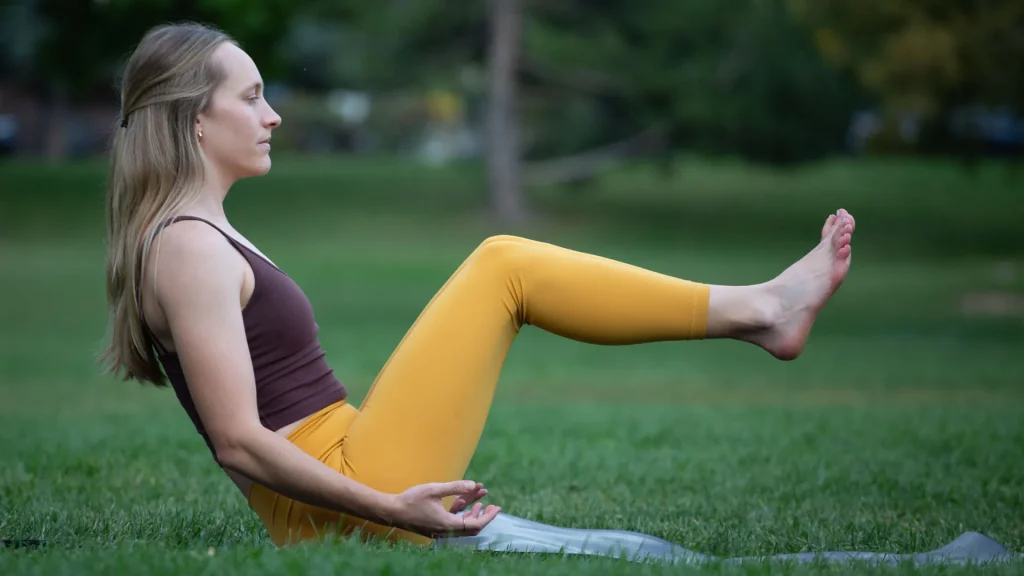
3. Boat Pose (Navasana)
Boat Pose is an excellent alternative to traditional sit-ups, engaging both the core and hip flexors.
How to Perform:
- Sit on the mat with knees bent and feet flat.
- Lean back slightly and lift your feet off the floor. You can keep knees bent or extend legs.
- Extend arms alongside your legs or hold behind the thighs for support.
- Engage your core and maintain a straight back.
- Hold for several breaths, then lower slowly.
Tip: Bend knees if your lower back rounds to avoid strain. Boat Pose strengthens the hip flexors dynamically while improving core stability.
4. Resisted Hip Hikes
Resisted hip hikes simulate functional hip flexion in a standing position, similar to walking, climbing, or running.
How to Perform:
- Attach a resistance band to a low anchor point and loop it around the top of one foot.
- Stand upright, facing away from the anchor.
- Lift the banded leg toward your chest, engaging hip flexors and core.
- Hold briefly at the top, then lower slowly.
- Repeat 10–15 reps per leg.
Tip: Use a wall or chair for balance if needed. This exercise strengthens the hip flexors under load while training upright stabilization.
5. Plank Pose Knee-to-Elbow
This plank variation targets hip flexors dynamically while engaging the core, glutes, and obliques.
How to Perform:
- Start in a plank or push-up position, keeping hips aligned with your body.
- Draw one knee toward the same-side elbow while maintaining a stable upper body.
- Hold briefly, then return to plank position.
- Repeat 10–12 reps per side.
This exercise builds hip flexor strength and coordination while challenging overall core stability.
Training Tips for Hip Flexors
- Start with Bodyweight: Focus on form before adding resistance.
- Progress Gradually: Increase repetitions or add resistance as strength improves.
- Engage the Core: Proper engagement prevents compensatory movements and supports spinal alignment.
- Include Recovery: Hip flexors can become tight; complement strengthening with gentle stretching.
- Consistency Matters: Perform these exercises 2–3 times per week for optimal results.
Conclusion
Hip flexor strength is essential for both athletic performance and everyday mobility. While stretching is important, building strong, functional hip flexors reduces injury risk, improves posture, and enhances movement efficiency. Incorporating exercises like straight leg raises, angled leg raises, Boat Pose, resisted hip hikes, and plank knee-to-elbow into your routine will provide a comprehensive approach to hip health.
Whether you’re a runner, an office worker, or simply someone who wants better mobility, strong hip flexors will help you move with more power, control, and comfort. Strengthen them consistently, and your body will thank you with improved performance, reduced pain, and enhanced quality of life.